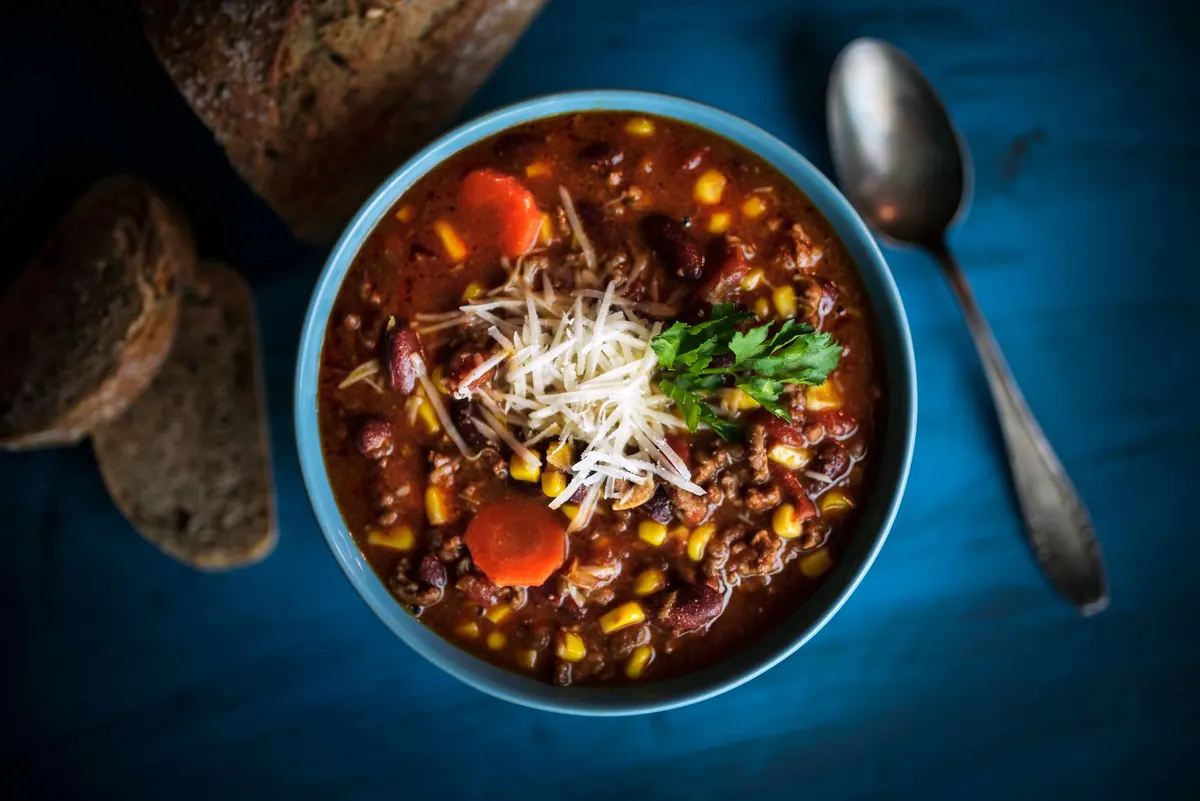
A slow cooker full of beef stew is one of the quiet comforts of a British winter. But it only earns its place on the counter if you treat it with a little respect. Build the flavour in a pan first, choose roots that hold their shape, and give the meat long enough to turn from chewy to yielding. This version uses chuck steak and whatever the greengrocer has looking best — parsnips, swede, celeriac, a couple of carrots — and it freezes beautifully.
Why This Stew Suits a Slow Cooker
Long, gentle heat is exactly what tough cuts need. The connective tissue in beef chuck breaks down over several hours, turning gelatinous and giving the gravy body that no stock cube can imitate. Because a slow cooker traps steam, almost nothing evaporates, so you need far less liquid than you would in a casserole dish.
That is also the catch. Without evaporation there is no reduction, so all the depth has to be built before the lid goes on. Browning the meat, cooking out a spoonful of tomato purée, and deglazing the pan with a little dark ale or extra stock is what separates a rich stew from grey meat in hot water.
Pick the Right Cut of Beef
Chuck and braising steak are the reliable choices, and shin is even better if you can get it — the bone and marrow add a lovely stickiness. Brisket works too, though it shreds rather than holds its shape. What you want to avoid is lean stewing steak, topside or anything labelled "quick fry". With no fat to baste them, those pieces tighten up and turn dry.
Cut the meat into chunks of around 4–5cm. They look too big, but they shrink considerably and smaller pieces disintegrate into the gravy. Trim only hard fat and gristle, dry the pieces on kitchen paper, then season and toss with plain flour. Brown them in batches in a hot pan — crowding the pan steams the meat instead of colouring it.
Roots: What to Use, and Where to Put Them
British root vegetables are at their best from October through to March. Most of them can go in at the start, cut into rough 3cm chunks so they cook at the same rate as the beef.
- Carrots — sweeten the gravy and rarely fall apart.
- Parsnips — quarter them lengthways and cut out the woody core of any large ones.
- Swede — cut smaller than you think; it stays firm.
- Celeriac — earthy and excellent, but it softens, so keep the dice chunky.
- Turnips — peppery and quick to cook; add them in the last hour if you want bite.
- Potatoes — waxy varieties hold their shape; floury ones break down and thicken the sauce.
- Onions, leeks and celery — soften these in the pan first. Raw onion in a slow cooker stays harsh.
- Beetroot — delicious, but it dyes everything purple. Cook it separately if that bothers you.
Layer the vegetables in the bottom of the pot and sit the beef on top. The denser roots take longer to heat through, and keeping the meat above them stops it from drying out against the base.
How to Make It
Serves 4–6.
- 1.2kg chuck or braising steak, cut into 4–5cm chunks
- 2 tbsp plain flour, 2 tbsp rapeseed or sunflower oil
- 2 onions, sliced; 2 celery sticks, sliced; 3 garlic cloves, chopped
- 3 carrots, 250g swede, 2 parsnips, 200g celeriac, all in 3cm chunks
- 1 tbsp tomato purée, 1 tbsp Worcestershire sauce
- 300ml beef stock, plus 200ml dark ale or stout (or 500ml stock in total)
- 1 tsp dried thyme, 2 bay leaves, salt and black pepper
- 1 tbsp cornflour, slackened in cold water (optional)
- Season the beef, toss it in the flour, and brown it in the oil over a medium-high heat, in two or three batches. Tip each batch into the slow cooker as it finishes.
- Lower the heat, add the onions and celery to the pan, and cook for 5–6 minutes until soft. Stir in the garlic and tomato purée and cook for another minute.
- Pour in the ale or a splash of the stock and scrape the browned bits off the base of the pan. Let it bubble for a minute, then pour the lot over the beef.
- Add the remaining stock, the Worcestershire sauce, thyme and bay leaves. The liquid should come about two-thirds of the way up the meat — no more.
- Cook on low for 7–8 hours or on high for 4–5 hours, until the beef gives way under the back of a spoon.
- To thicken, whisk the cornflour with a little cold water, stir it through and cook on high for 20–30 minutes. Alternatively, leave the lid off and cook on high for half an hour. Season to taste and remove the bay leaves.
Dumplings, If You Fancy Them
Mix 150g self-raising flour with 75g shredded suet, a pinch of salt and enough cold water to make a soft dough. Shape into six balls and sit them on top of the stew for the last 45 minutes on high, with the lid firmly on. They will swell and steam rather than brown, which is entirely in keeping with the dish.
Make It Ahead
This stew genuinely improves overnight. Cool it as quickly as you can — decant into shallow containers rather than leaving a deep pot sitting on the hob — then refrigerate within about 90 minutes. It will keep for up to three days.
If you are cooking specifically for the next day, stop half an hour short of the full cooking time. The beef will finish softening when you reheat it, and it won't end up mushy. Warm it gently on the hob with a splash of water or stock, stirring now and then, until it is piping hot all the way through.
Freezing and Reheating
Stew freezes well, in portions, for up to three months. Freeze it once it is completely cold, leaving a little headroom in each container as liquids expand. Label with the date. Defrost overnight in the fridge rather than on the worktop.
Two caveats. Don't freeze dumplings — they turn to doughy stones — so add them fresh on the day. And if you plan to freeze the stew, leave the potatoes out, as they can turn grainy and slightly sweet after defrosting. Cook them separately and stir them in when you reheat, or simply serve the stew over mash instead.
Reheat until it is piping hot throughout, and only reheat it once. If you have a large batch, take out only what you need.
What to Serve With It
Buttered greens or cabbage cut through the richness, and pickled red cabbage does the same job with more bite. Creamy mash, a baked potato or simply thick slices of buttered bread will all mop up the gravy. A spoonful of horseradish cream or a little mustard stirred in at the end lifts the whole pot.
For variations, add a handful of pearl barley with the stock — it thickens the stew beautifully, though you will need an extra 100ml of liquid. A few prunes or a spoonful of redcurrant jelly round off the ale's bitterness. Swap the roots about freely; the method stays the same.
A Few Practical Notes
Slow cookers vary enormously, so treat the timings as a guide and check at the shorter end the first time you make this. Never fill the pot more than three-quarters full, as it needs room to come to temperature. Resist stirring — every time you lift the lid you lose heat and add cooking time. Above all, season at the end. The liquid reduces very little, so salt added at the start can easily become too much.
Photo: Piotr Arnoldes / Pexels